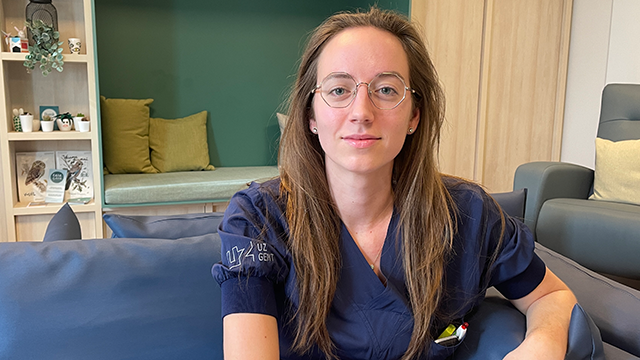
Presented by Prof Toon Van Gorp (University Hospitals Leuven)
Professor Toon Van Gorp, a gynaecological oncologist at University Hospitals Leuven and current chair of the BGOG, provides a synopsis of key presentations on endometrial cancer at the ESGO congress.
The first study, ENGOT-EN5 or SIENDO, compared selinexor to placebo as maintenance therapy following primary chemotherapy in patients with advanced or recurrent endometrial cancer. Unfortunately, the study yielded a negative outcome in the overall population, showing only a trend towards selinexor’s benefit. Subgroup analysis after a 30-month follow-up revealed a survival benefit from selexinor compared to placebo for patients with TP53 wild-type tumours, with an HR = 0.41. This significant difference in outcome initiated a new study, the ENGOT-EN20 trial, a large randomized placebo-controlled phase 3 trial, to investigate the benefit of selinexor specifically for this subgroup.
The next study, part 1 of the ENGOT-EN6 or RUBY study, presented outcomes based on the molecular profile of the tumour. Surprisingly, not only dMMR tumours but also patients with TP53 mutations demonstrated benefits. This finding contrasts with previous expectations, as immunotherapy has not proven effective in more aggressive tumours to date. However, these data indicate its efficacy in TP53-mutated endometrial cancer. Additionally, there was a notable improvement in patient-reported QoL when dostarlimab was combined with chemotherapy, extending to time to first deterioration.
The AtTEnd study, or the ENGOT-EN7 study, investigated the PD-L1 inhibitor atezolizumab with or without chemotherapy, a similar study design as with dostarlimab. The results showed promising outcomes in terms of PFS for dMMR patients and a general benefit in the overall population but not for pMMR tumours. This contrasts with the RUBY trial, which demonstrated benefits in the latter group, raising questions about the differences between atezolizumab and dostarlimab.
The ENGOT-EN9 or LEAP-001 study presented the most compelling news at ESGO. It compared standard chemotherapy with paclitaxel and carboplatin to treatment with pembrolizumab plus lenvatinib. Earlier results from KEYNOTE-775 favoured the combination of pembrolizumab plus lenvatinib over chemotherapy in the second line. However, in the first line, both PFS and OS were negative. There was a trend indicating potential benefit from pembrolizumab plus lenvatinib in the non-prespecified subgroup of patients who received prior chemotherapy in the neoadjuvant or adjuvant setting, suggesting the development of resistance. Conversely, patients who did not receive chemotherapy did not experience any benefit.
References:
Sehouli J., 2024, Selinexor Maintenance For Patients With TP53wt Advanced Or Recurrent Endometrial Cancer: Long-Term Follow Up Of Efficacy And Safety Subgroup Analysis Of The ENGOT-EN5/GOG-3055/SIENDO Study. ESGO eAcademy; 410945; ESGO2024_0307_045
McCourt C, 2024, Progression-Free Survival 2-Progression-Free Survival 1 In Patients With Primary Advanced/Recurrent Endometrial Cancer Treated With Dostarlimab Plus Chemotherapy Compared With Chemotherapy Alone In The ENGOT-EN6-NSGO/GOG-3031/RUBY Trial. ESGO eAcademy; 410952; ESGO2024_0307_052
Nishio S, 2024, Phase III Double-Blind Randomized Placebo Controlled Trial Of Atezolizumab In Combination With Carboplatin And Paclitaxel In Women With Advanced/Recurrent Endometrial Carcinoma: The Asian Cohort Of AtTEnd/ENGOT-EN7 Trial. ESGO eAcademy; 411022; ESGO2024_0308_053
Boere I, 2024, Time To Deterioration Of Patient-Reported Outcomes In Patients With Primary Advanced Or Recurrent Endometrial Cancer Treated With Dostarlimab Plus Chemotherapy Compared With Chemotherapy In The ENGOT-EN6-NSGO/GOG-3031/RUBY Trial. ESGO eAcademy; 411024; ESGO2024_0308_055
Marth C, 2024, Lenvatinib Plus Pembrolizumab Versus Chemotherapy As First-Line Therapy For Advanced Or Recurrent Endometrial Cancer: Primary Results Of The Phase 3 ENGOT-en9/LEAP-001 Study. ESGO eAcademy; 411156; ESGO2024_0310_027
We use cookies to ensure that we give you the best experience on our website. If you continue to use this site we will assume that you are happy with it.