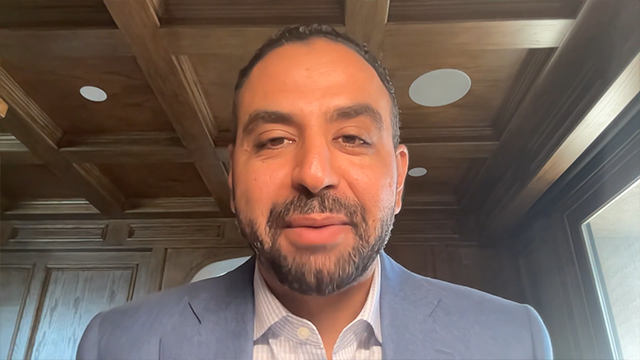
Presented by Dr Daan De Maeseneer (AZ Sint-Lucas, Bruges, Belgium)
In this video, Dr Daan De Maeseneer, medical oncologist at the AZ Sint-Lucas in Bruges and uro-consultant at the Ghent University Hospital discusses the results of three studies presented in one of the mini-oral sessions on genitourinary tumors at ESMO 2025.
First, updated results of the NIAGARA trial were presented, a landmark study in muscle-invasive bladder cancer (MIBC) that previously demonstrated the benefit of adding durvalumab to neoadjuvant and adjuvant chemotherapy. Previous analyses showed a 10% increase in pathological complete response as well as a survival benefit, establishing this regimen as a new standard of care in this population. At ESMO 2025, investigators presented secondary endpoint data on quality of life. Reassuringly, the study showed no significant deterioration in quality-of-life metrics when durvalumab was added to chemotherapy. As such, these findings indicate that concerns about autoimmune toxicity do not translate into major long-term impairments in patient-reported wellbeing. Instead, the most notable decline in quality of life was associated with the surgical intervention itself, rather than systemic therapy, emphasizing surgery as the main driver of short-term quality-of-life changes.¹
The second abstract presented early data from the FORAGER-1 trial, a phase I study evaluating a next-generation FGFR3 inhibitor. FGFR3 alterations are common in urothelial carcinoma. Existing therapies targeting this alteration, such as erdafitinib, have shown efficacy but are often limited by significant toxicity, including dermatologic, ocular, and metabolic adverse effects, necessitating frequent dose adjustments or treatment discontinuations. FORAGER-1 tested LY3866288, a more selective FGFR3 inhibitor designed to reduce off-target toxicities while maintaining antitumor activity. The study investigated multiple doses of this agent, with the 200 mg twice daily dose emerging as both tolerable and active. In a heavily pretreated population, an overall response rate of ~30% was obtained, while 94% of patients receiving the 200 mg BID dose achieved disease control at four months. Furthermore, approximately 60% remained on treatment at six months.² These results suggest a favorable balance between efficacy and tolerability, highlighting the promise of selective FGFR3 inhibition as a viable therapeutic strategy in the future management of urothelial carcinoma.
The third presentation featured results of the SunRISe-4 trial exploring TAR-200, a novel intravesical drug delivery system, in patients with cT2-T4a N0M0 MIBC. Patients were randomized to receive either four cycles of the checkpoint inhibitor cetrelimab alone or cetrelimab in combination with TAR-200 prior to surgery. The addition of TAR-200 resulted in a 10% higher pathological complete response rate compared to checkpoint inhibitor monotherapy (38% vs. 28%). Importantly, SunRISe-4 also incorporated exploratory biomarker analyses. Both urinary tumor DNA (utDNA) and circulating tumor DNA (ctDNA) were measured preoperatively. utDNA correlated strongly with local response at surgery, establishing it as a potential surrogate marker for bladder-confined disease activity. In contrast, ctDNA in the blood was not predictive of local response but proved to be associated with event-free survival. These findings indicate a complementary role for urinary and circulating biomarkers: where utDNA may help to predict local treatment efficacy, ctDNA can inform prognosis and guide decisions regarding adjuvant systemic therapy.³
References:
Van de Heijden MS, et al. ESMO 2025; Abstract 3069MO.
We use cookies to ensure that we give you the best experience on our website. If you continue to use this site we will assume that you are happy with it.