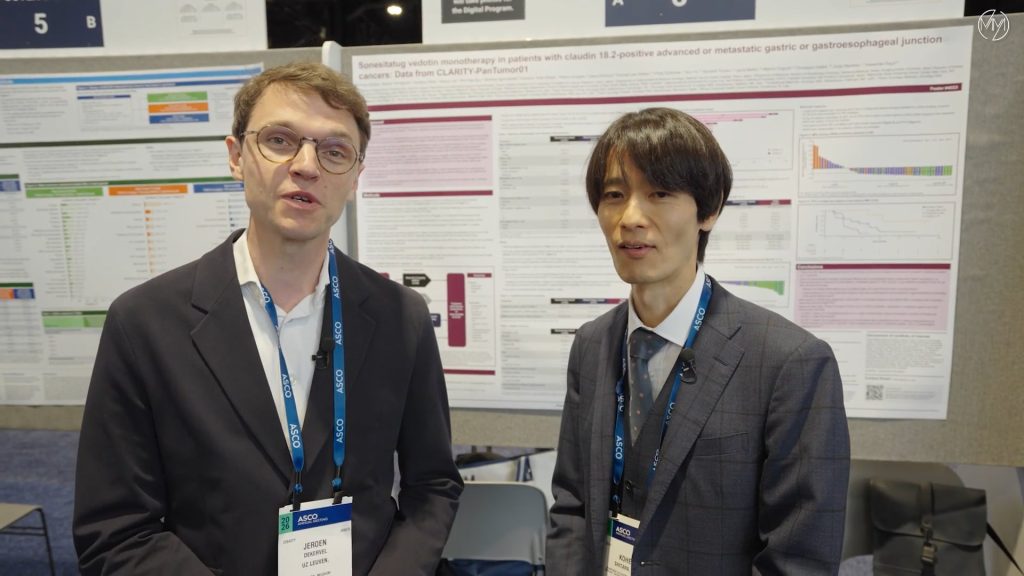
Presented by Prof Dr Emmanuel Seront (Cliniques Universitaires Saint-Luc, Brussels – Belgium)
At ASCO 2025, Prof Dr Emmanuel Seront, a medical oncologist at Cliniques Universitaires Saint-Luc in Belgium, discussed the long-term efficacy of belzutifan, a HIF-2α inhibitor, presented in the LITESPARK-004 study, which focused on patients with Von Hippel-Lindau (VHL) disease. VHL disease is caused by a germline loss of the VHL gene, leading to hyperactivation of the transcription factor HIF, which in turn promotes angiogenesis and tumour development. Patients with VHL disease typically present with renal tumours, hemangioblastomas of the CNS, neuroendocrine tumours, and other manifestations.
The LITESPARK-004 study was a single-arm Phase II trial that enrolled 61 patients with at least one renal tumour, as well as other potential manifestations such as hemangioblastomas or pancreatic neuroendocrine tumours. The primary endpoint of the trial was the objective response rate of renal tumours. The study reported a remarkable objective response rate of 70%, with 11% of patients achieving a complete response. Additionally, over five years, more than 50% of patients remained on treatment, highlighting the long-term efficacy of belzutifan. Approximately 80% of patients continued to experience disease control radiologically after five years. Furthermore, the treatment demonstrated systemic efficacy, with tumour size reductions observed not only in renal tumours but also in hemangioblastomas in the central nervous system (CNS) and retina, as well as pancreatic neuroendocrine tumours.
Regarding safety, HIF inhibitors like belzutifan are known to induce anaemia due to their inhibition of erythropoietin (EPO), and nearly all patients in the study developed some degree of anaemia. However, only 13% of patients experienced severe anaemia, which was effectively managed with EPO injections administered to 80% of patients.
These results suggest that belzutifan offers sustained and promising efficacy in the treatment of VHL disease with manageable safety concerns, particularly in controlling anaemia.
We use cookies to ensure that we give you the best experience on our website. If you continue to use this site we will assume that you are happy with it.